The best history documentaries. Traveling from the Middle ages to the industrial revolutions, to understand the past that shaped today's world.
A glimpse into the great ancient Western and Eastern civilizations, America's
history before and after Columbus, Indian and Chinese kingdoms and empires.
The Castillo,
Maya, Chichen Itza, Mexico, ca. 800-900 CE. A temple to Kukulkan sits
atop this pyramid.
Chichen Itza was a settlement in the
Northern Maya Lowlands from the Late Classic (c. AD 600–900) through the
Terminal Classic (c. AD 800–900) and into the early Postclassic
period (c. AD 900–1200). The site exhibits a multitude of architectural styles,
reminiscent of styles seen in central Mexico and of the Puuc and Chenes styles
of the Northern Maya lowlands.
Chichen Itza was one of the largest Maya
cities and it was likely to have been one of the mythical great cities, or
Tollans, referred to in later Mesoamerican literature.
Compiled from Compton's Living Encyclopedia on America Online (August 1995)
1. HISTORICAL AND CULTURAL CONTINUITY
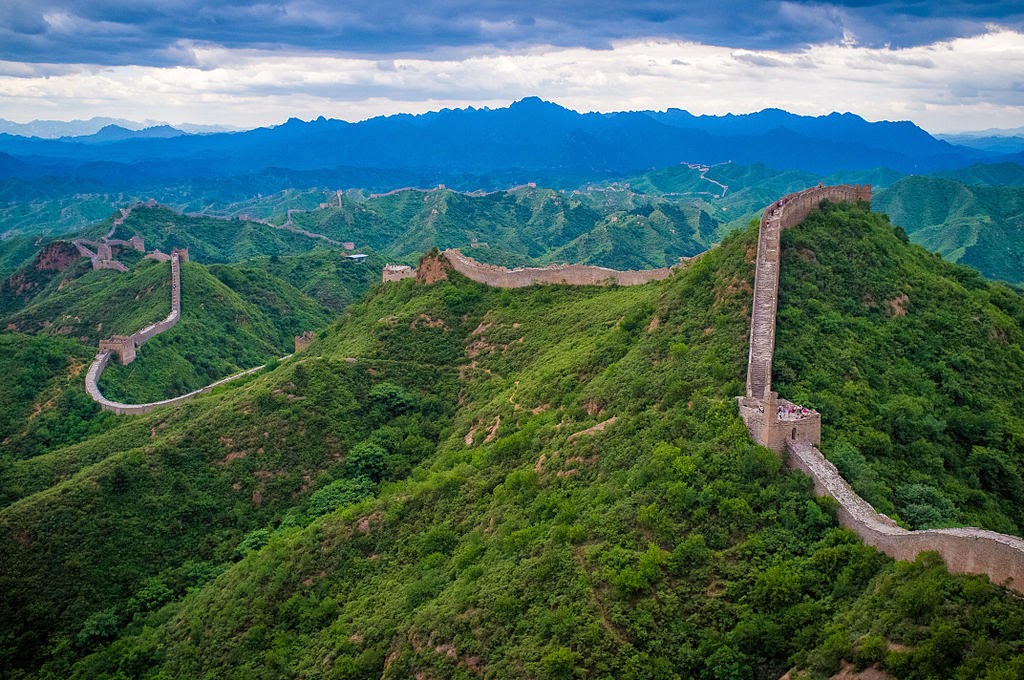
A significant aspect of China is its long cultural and national history. The Chinese
people have shared a common culture longer than any other group on Earth. The Chinese
writing system, for example, dates back almost 4,000 years. The imperial dynastic system
of government, which continued for centuries, was established as early as 221 BC. Although
specific dynasties were overturned, the dynastic system survived. China was even ruled at
times by foreign invaders, such as the Mongols during the Yuan Dynasty, from AD 1279 to
1368, and the Manchus during the Ch'ing Dynasty, from AD 1644 to 1911, but the foreigners
were largely absorbed into the culture they governed. It is as if the Roman Empire had
lasted from the time of the Caesars to the 20th century, and during that time had evolved
a cultural system and written language shared by all the peoples of Europe.
The dynastic system was overturned in 1911, and a weak republican form of government
existed until 1949. In that year, after a long civil war, the People's Republic of China,
with a Communist government, was proclaimed. This government and the ruling Communist
party have controlled China ever since. Although the dynastic system has disappeared, the
People's Republic occupies essentially the same territory and governs the same people. If
anything, the culture and power of China seem stronger in the late 20th century than at
almost any other period in history. Under the People's Republic, China's role in world
economic and political affairs has grown increasingly more important. Read more on Chinese Cultural Studies, Concise Political History of China
The most famous of the surviving Byzantine mosaics, Hagia Sophia in Constantinople – the image of Christ Pantocrator
Was Jesus a Buddhist? As the Buddhist-Christian Studies, Annual 2005 by James M. Hanson pointed out: "Certainly He was many things--Jew, prophet, healer, moralist,
revolutionary, by his own admission the Messiah, and for most Christians
the Son of God and redeemer of their sins. And there is convincing
evidence that he was also a Buddhist..."
It is unknown whether Jesus did actually travel to India, however we can certainly see that many of spiritual teachings of Christianity are likely to have descended from Eastern cultures, possibly from India. An intriguing and ground-breaking documentary from the BBC investigates...
Al-Andalus (Arabic: الأندلس, trans. al-ʼAndalus, also
known as Muslim Spain or Islamic Iberia, is a medieval Muslim cultural domain
and territory occupying most of the regions that are today's Spain and Portugal. The name describes
the great portions of the Iberian Peninsula governed by Muslims (generically called Moors) at various times between 711 and 1492, until the reconquista was accomplished.